

Temporary Fence Feet & Bases: Concrete-Filled Plastic vs. Recycled Rubber vs. Steel Plate — Ballast Engineering, Trip Hazard Compliance, and Fleet Procurement Guide
Compare temporary fence feet in concrete-filled plastic, rubber and steel. Check ballast, access risks and fleet costs, then prepare a useful procurement RFQ.
For temporary fencing hire operations, civil contractors, event logistics managers, and import distributors, temporary fence feet and bases connect panel selection to site stability, pedestrian access, handling and replacement cost. Choose the complete panel-base-brace assembly before choosing a base solely by material or purchase price.
Procurement summary: No single base material solves every jobsite condition.
- Concrete-filled HDPE bases suit projects that need substantial ballast in a replaceable, visible shell. Compare filled mass, footprint, drainage and handling arrangements.
- Recycled rubber feet are worth evaluating for repeated hire cycles and finished surfaces. Verify the actual compound, impact performance and grip on the intended surface; rubber is not unbreakable or universally slip resistant.
- Flat steel plate bases offer a lower profile where space is constrained. Plate edges, projecting sockets, fixings and anchorage still need assessment. A product sold as “anti-trip” is not automatically an accessible installation.
Published and reviewed: November 7, 2026. Scope: Global commercial procurement and preliminary engineering comparison, in English. The worked examples are transparent assumptions, not product tests, quoted prices, certified wind ratings or legal approval. Local requirements, ground conditions and the supplier's tested assembly govern deployment. Reassess whenever screening, gates, exposure or the layout changes.
Start by comparing our fence bases and feet with the intended temporary fence panels and fence clamps and couplers. Request drawings and configuration-specific evidence before ordering a fleet. The cover photograph shows a steel support with raised sockets and stiffening; it is not a flush walking surface or the dimensioned model used below.
1. Ballast Physics: Overturning Moment & Equilibrium Mechanics
Wind produces lateral force above ground level. Base and panel deadweight provide restoring moments about a potential tipping edge. For a simplified rigid assembly on level ground:
Wind force F = q × C_eff × A
Dynamic pressure q = 0.5 × air density × V²
Overturning moment M_O = F × h_cp
Restoring moment M_R = sum(m_i × g × b_i)
Here, A is the reference panel area in square metres; C_eff must correspond to that area convention and the actual infill; V is wind speed in metres per second; and h_cp is the force height in metres. Each m_i is an assigned mass in kilograms, g = 9.81 m/s², and b_i is that mass's horizontal distance to the relevant tipping edge. The resulting moments are in newton metres.
Do not assign a generic drag coefficient to every mesh or infer one from shade-cloth percentage alone. Wind direction, shielding, gust definition and load factors need a consistent engineering basis. Panel joints and bases shared between bays also change the tributary loading; counting a complete panel's weight at every shared post overstates resistance.
Worked example: footprint orientation changes the result
Assume one assessed support carries a 28 kg foot and 7 kg of assigned panel mass. Assume both centres of gravity lie 0.30 m from the tipping edge. The unfactored restoring moment is:
M_R = (28 + 7) × 9.81 × 0.30 = 103.0 N·mAn illustrative 200 N horizontal force acting 1.05 m above ground creates M_O = 210 N·m, exceeding that restoring moment even before design factors. This is a deliberately assumed load, not a measured wind response or a conversion into a safe gust speed.
For a 600 × 240 mm foot, the 0.30 m arm is possible only in the appropriate orientation with centered loading. If the effective dimension in the tipping direction is 240 mm, the arm becomes 0.12 m and the same assigned mass gives only 41.2 N·m. Offset sockets, uneven ground, foot deformation and a shifted centre of gravity require their own geometry.
Visual 1: Illustrative ballast equilibrium
The drawing explains the assumed lever arm; it does not certify the illustrated base. Increasing an effective footprint from 500 to 600 mm increases the corresponding restoring moment by 20% only when mass, loading, orientation and centre-of-gravity position remain unchanged.
Overturning is one failure mode. Also check sliding, uplift, tube bending, socket failure, coupler movement, brace resistance and anchor pull-out. Do not credit friction without evidence for wet, dusty or contaminated surfaces. Screening or banners can change loading substantially; ask for the approved screened configuration and the site's inspection and weather-response plan.
2. Core Material Comparison: Concrete vs. Rubber vs. Steel Plate
A. Blow-molded HDPE shells filled with concrete
Concrete-filled plastic bases concentrate ballast in a convenient footprint. A colored shell can improve visibility and protect the core during routine handling. The useful specification is the delivered, cured base mass and dimensional tolerance, rather than a shell's advertised capacity.
Inspect corners, socket lips, fill closures and the underside for damage. Water ingress, concrete quality, shell formulation and repeated impacts can affect service life. Ask for evidence at the expected operating temperature and UV exposure rather than assuming all virgin material is durable or all recycled resin is unsuitable. Labels such as “UV8” or “UV12” need a named test method, exposure conditions and acceptance criterion to be meaningful.
B. Solid recycled rubber feet
Recycled rubber bases can be molded from different compounds and bonding systems; they are not all vulcanized products with the same properties. Resilience can help with repeated handling, but tearing, permanent distortion, crumb loss, staining and chemical exposure remain possible.
Ask for representative samples and compare them on the actual paving when dry and wet. A perceived grip advantage does not establish a numerical friction coefficient or prevent every slide. Check filled assembly stability separately: changing to a lighter rubber foot can reduce restoring moment even if surface grip improves.
C. Fabricated flat steel plate bases
A thin steel plate reduces the height of the base body, while socket tubes, stiffening ribs, bolts and warped corners can still project. Obtain a section drawing showing the highest installed feature and every exposed edge. Inspect welds, coating coverage, drainage and compatibility with the panel post.
If anchorage is proposed, obtain the substrate, anchor layout and capacity requirements. Concrete, asphalt and compacted soil are not interchangeable anchor substrates. Confirm permission to drill and locate buried services. Unanchored low-mass steel bases require a stability assessment of the full assembly; their strength as a fabrication does not provide ballast by itself.
D. Hollow field-fillable shells
Empty shells can reduce transported mass, but usable fill volume and the approved fill material determine the delivered ballast. A shell designed for concrete filling is not automatically suitable for repeatedly draining water or sand.
Include filling equipment, labor, cure time, closures, drainage and inspection in the purchase decision. Water-filled designs need an approved freezing-weather procedure. Do not drill drainage into a ballast chamber or substitute fill without the manufacturer's instructions.
3. Visual 2: Base Geometry & Pedestrian Trip Hazard Profiles
Keep the clear walking route separate from feet, braces and projecting fixings. The profiles below compare geometry, not legal classifications. Yellow paint or a beveled rubber cover can improve visibility or transitions, but does not restore lost clear width or make an unstable obstruction acceptable.
4. Engineering Standards & Pedestrian Accessibility Requirements
United States: distinguish ADA surfaces from public-right-of-way requirements
The U.S. Access Board's floor and ground surfaces guide explains ADA changes in level: up to 1/4 inch may be vertical; up to 1/2 inch requires a bevel no steeper than 1:2. Greater changes require treatment as a ramp or curb ramp, or a suitably sloped walkway. Thus an 8–10 mm plate is not automatically acceptable simply because it is thin: its actual transition and installed surface still matter.
For public sidewalks, distinguish those surface provisions from the applicable public-right-of-way rules. The Access Board's PROWAG overview describes guidelines and agency adoption. Confirm the enforcing authority and project scope instead of treating PROWAG as a blanket certification for every temporary fence foot. Have the route reviewer specify clear width, passing provision, detectable boundaries and detours for the project.
United Kingdom: use the applicable street-works plan
The Department for Transport's Safety at Street Works and Road Works publication provides the Red Book code for signing, lighting and guarding. Its stated scope excludes motorways and dual carriageways with speed limits of 50 mph or more. Use the appropriate highway authority requirements for the site. The publication is not a material-based approval for steel feet, nor should it be conflated with a Chapter 8 product certificate.
A citation also needs the correct edition and status. The BSI URL formerly cited as “BS 1722-18:2020” actually identifies BS 1722-18:2011, withdrawn on December 14, 2020. That historical BSI catalogue record cannot establish a current wind rating or a minimum base mass. Require the applicable current specification and an assembly-specific report from the supplier.
Australia, New Zealand and other markets
Have the specifier identify the current temporary-fencing, wind-action and accessibility requirements that apply at the destination. Request the standard edition, configuration, report issuer and installation limitations. No universal socket depth, ballast mass or wind trigger is asserted here. Overseas product labels do not replace a local design and route review.
5. Socket Layout & Multi-Hole Engineering (2-Hole vs. 5-Hole vs. 6-Hole)
Match post outer diameter, socket internal diameter, insertion depth and centre spacing using a dimensioned drawing and a physical fit sample. Check coating thickness, weld seams and manufacturing tolerances: a nominal tube size alone does not establish a usable fit. Excess clearance permits movement; insufficient clearance can prevent seating or damage the coating.
Two-hole feet may suit straight runs. Multi-hole patterns can offer offset positioning and corners, but the hole count does not guarantee that adjacent panels, clamps and posts will clear one another. Mock up the intended corner, end bay and ground slope before approving a container order.
Offsetting the post to keep a base inside the site changes its lever arms and directional stability. Recheck that configuration instead of transferring a centered-base result. Gates introduce opening, closing and impact loads, so use a gate-specific support arrangement. Stack bases or use extension posts only where the manufacturer documents the connection and approved loading.
Need a compatibility check before pricing? Send the post and base drawings with your RFQ, including the intended corners, screening and gate positions.
6. Technical Comparison: Temporary Fence Bases
This qualitative comparison is a procurement screening tool. It contains no measured fleet failure rates, guaranteed lifetimes or universal material friction values. Require product-specific mass, dimensions and test evidence for the chosen SKU.
| Engineering & procurement check | Concrete-filled HDPE | Recycled rubber | Flat steel plate | Field-fillable shell |
|---|---|---|---|---|
| Ballast basis | Weigh the cured finished unit | Verify molded unit mass | Include plate, sockets and separate ballast | Verify empty mass and usable approved fill |
| Footprint and orientation | Check effective tipping width | Check deformation under load | Check installed plate geometry | Check filled shape and seating |
| Handling damage | Inspect shell and core | Inspect tears and crumb loss | Inspect welds and bent edges | Inspect closures and punctures |
| Sliding evidence | Test actual underside and ground | Verify compound on intended ground | Check coating and anchor arrangement | Test filled unit on intended ground |
| Pedestrian interface | Keep block outside clear route | Bevels still occupy route space | Check edges, sockets and bolt heads | Keep filled body outside clear route |
| Cold-weather review | Check drainage and material evidence | Check compound performance | Check coating and retained water | Use approved fill and freeze procedure |
| Post compatibility | Verify bore, spacing and depth | Verify molded socket dimensions | Verify socket or spigot interface | Verify socket and chamber separation |
| Repeated hire inspection | Record cracks and core loss | Record distortion and tearing | Record corrosion and deformation | Record leaks and missing plugs |
| Freight comparison | Include pallet and stillage mass | Include stack dimensions | Include secure stacking and protection | Include local filling costs and time |
| Required approval evidence | Complete assembly report | Complete assembly report | Assembly and anchor report where used | Assembly with specified fill and mass |
7. 3-Year Fleet Total Cost of Ownership (TCO) Analysis
Compare delivered cost and verified loss records before choosing a fleet material. The following is an illustrative USD purchasing model, not supplier quotations, market prices or measured customer results. It assumes a maintained operating fleet of 500 feet, replacement at the original unit price, three years of use and 18,000 unit-months. Annual losses are percentages of the maintained 500-unit fleet, not a compounding reduction in fleet size.
| Model input or result | Standard concrete | Higher-price concrete | Rubber | Steel plate |
|---|---|---|---|---|
| Assumed price per foot, USD | $9.50 | $13.50 | $19.00 | $38.00 |
| Initial purchase, 500 units | $4,750 | $6,750 | $9,500 | $19,000 |
| Assumed annual loss rate | 22% | 12% | 4% | 3% |
| Replacement units over 3 years | 330 | 180 | 60 | 45 |
| Replacement purchase cost | $3,135 | $2,430 | $1,140 | $1,710 |
| Assumed resale credit at year 3 | $0 | $1,200 | $3,500 | $8,500 |
| Net purchase + replacements − resale | $7,885 | $7,980 | $7,140 | $12,210 |
| Net cost per operating unit-month | $0.44 | $0.44 | $0.40 | $0.68 |
The model excludes freight, duty, tax, finance, storage, handling labor, anchors, downtime and liability costs. It therefore gives a partial ownership-cost comparison, not full TCO. Add those items from your own records. Do not assign zero injury risk to steel or turn assumed loss rates into a service-life claim.
A simple sensitivity check shows why purchase price alone is insufficient: increasing rubber's assumed annual loss from 4% to 10% adds 90 replacements over three years, or $1,710. Its modeled net then becomes $8,850, above either concrete scenario. With no resale credit, the rubber and steel totals become $10,640 and $20,710 respectively. There is no universal 18-month payback.
Record lifting time and rejected units during a trial using the same handling task. The UK HSE manual-handling overview emphasizes risk assessment and states that the law does not set specific weight limits. A lighter foot is not automatically safe for single-person carrying: frequency, grip, posture, distance and the worker also matter.
8. Ocean Freight & Container Optimization Mechanics
Dense ballast can reach a shipment's allowable mass before exhausting its space. Use the specific container's permitted payload, carrier booking conditions, inland limits and packing design. Container gross mass includes its tare; cargo mass includes pallets and stillages. A single universal “26-tonne limit” is not a reliable loading instruction.
For an assumed cargo allowance of 26,000 kg and a hypothetical packaging mass of 1,000 kg, the weight-only ceiling for 28 kg filled feet is:
Available product mass = 26,000 − 1,000 = 25,000 kg
Weight-only ceiling = floor(25,000 / 28) = 892 feet
This is not a packing promise. Door clearance, stack stability, floor loading, securing, axle limits and unloading access can reduce the count. A mixed load of panels, feet, clamps and braces needs a dimensioned plan; adding their nominal weights cannot prove the load physically fits.
Compare imported filled feet with imported shells plus local filling on the same delivered basis. Obtain shell stack dimensions rather than assuming thousands of units will nest. Include concrete or other approved fill, labor, curing space, rejected fills and closure checks. Freight savings depend on the shipment quote and packing plan; a fixed percentage saving or local hourly-wage break-even is not supportable without those inputs.
9. Container RFQ & Factory QA Inspection Checklist
Use this checklist to make competing quotations comparable. Agree the acceptance method, sample size and rejection criteria before production rather than presenting an arbitrary drop height or polymer label as an industry rule.
- Assembly scope: Identify panel dimensions, mesh or screen, post sizes, clamps, corners, gates, braces and destination conditions. Request the exact tested configuration and installation instructions.
- Finished mass and dimensions: State the chosen SKU's mass tolerance, footprint, fill condition and dimensional drawing. Agree how random units will be weighed and measured.
- Material traceability: Obtain shell resin or rubber compound identification, recycled-content claims, coating specification and batch records. Request relevant UV, cold-weather and chemical-exposure evidence.
- Socket fit: Approve post/socket tolerances, hole spacing, insertion depth and drainage using production samples. Test the intended corner and offset positions.
- Core and fill quality: Agree fill material, cure requirements, closure integrity and inspection for voids or loose material. Keep socket drainage separate from sealed ballast chambers.
- Handling durability: Agree representative handling or impact tests with the supplier, including temperature, orientation, sample count and failure definition. Use a controlled test area rather than instructing crews to throw feet from vehicles.
- Pedestrian route and anchors: Record required clear space, exposed features and anchoring details. Obtain the project's route and structural approval where required.
- Packaging and fleet records: Confirm loaded pallet mass, stack limits, lifting points, securing and unload equipment. Track deployed, returned, damaged and missing feet by type to replace assumed TCO inputs with yard evidence.
10. Frequently Asked Questions (FAQ)
Can sandbags on standard plastic fence feet increase wind resistance?
Additional retained mass may increase restoring moment, but placement and restraint determine whether it contributes. Do not overload the lower frame tube or obstruct the route. Use the supplier's approved ballast and brace arrangement and reassess screening; loose sandbags do not establish a new wind rating.
Why can plastic fence feet split after winter?
Possible causes include trapped freezing water, impact damage, unsuitable low-temperature material or a compromised core. Inspect failed units and drainage before diagnosing the cause. Follow the manufacturer's winter and fill instructions; do not drill a sealed ballast chamber to create an improvised drain.
When should we choose rubber over concrete-filled plastic?
Evaluate rubber when repeated handling, surface marking or base shape is a practical concern. Compare trial units for damage, grip and compatibility under the same task. Select it only after checking that the available mass and support layout meet the project's stability requirements.
Are low-profile steel plates automatically ADA or Chapter 8 compliant?
No. Accessibility depends on the applicable route requirements and installed geometry, including edges, socket projections, anchors and clear space. “Anti-trip” describes a design intention. It does not establish legal compliance or remove all fall risk.
What maximum wind speed can a panel with a 28 kg foot withstand?
Base mass alone cannot answer this. Panel area and infill, footprint orientation, joints, braces, anchors, ground conditions and the design wind basis all matter. Request a configuration-specific rating with its test or calculation basis. Section 1's arithmetic illustrates moments and is not a safe operating speed.
Can we import empty shells and fill them locally?
Yes, if the shell is approved for the chosen filling process. Compare delivered and filled cost, including packing, labor, fill, cure time and inspection. Confirm the required finished mass and fill consistency before treating empty-shell freight savings as a procurement advantage.
Does greater socket depth always solve panel movement?
No. Depth, clearance, post wall thickness, socket stiffness and the rest of the connection act together. Use the approved drawing and fit sample. Do not treat a generic 100 mm minimum as a substitute for evidence covering the actual post and base.
Is virgin HDPE always better than recycled plastic?
Not by label alone. Resin consistency, contamination control, additives, molding quality and service-condition test results matter. Compare traceable product evidence and batch acceptance criteria instead of assuming a recycled-content percentage determines lifetime.
11. Sources & Reference Boundaries
The following five official sources were checked on November 7, 2026. They support the scope and accessibility or handling discussion; they do not validate the hypothetical costs, fleet losses or ballast examples above.
- U.S. Access Board — Floor and Ground Surfaces: explains surface stability, slip resistance and changes in level under the ADA Standards. It does not certify a fence-base product.
- U.S. Access Board — PROWAG overview: identifies public-right-of-way guidelines and adoption history. Check the applicable authority and project scope.
- UK Department for Transport — Safety at Street Works and Road Works: official Red Book publication and stated road-scope exclusions. It is distinct from a product conformity report.
- BSI — BS 1722-18:2011 catalogue record: withdrawn, historical reference only. The page is not evidence of a 2020 edition or a current assembly rating.
- UK HSE — Manual Handling at Work: explains avoiding, assessing and reducing handling risks; its overview confirms there is no specific legal weight limit.
Recheck project requirements at specification and order approval, and review this guide within 12 months or sooner if a cited requirement changes.
Technical Inquiry & Container Procurement Support
Planning fleet replenishment or a mixed-container import? Review our fence bases and feet, match them with temporary fence panels and fence clamps and couplers, then request a configuration-specific quotation.
Include quantity, destination port, panel dimensions, post OD, base layout, screening and the site conditions. Ask which drawings, installation instructions, packing details and assembly reports are available for the proposed combination. Have the responsible project designer confirm stability and pedestrian-route suitability before deployment.
Author

Categories
More Posts
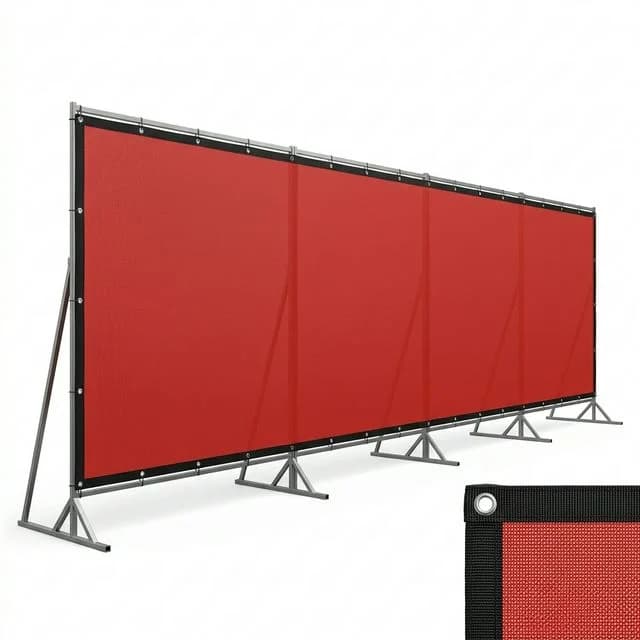
Acoustic Barriers on Temporary Fencing: Wind Loads & Noise Compliance Guide
Learn how attaching acoustic blankets to temporary fence panels impacts wind loading, structural stability, and noise compliance for urban construction sites.
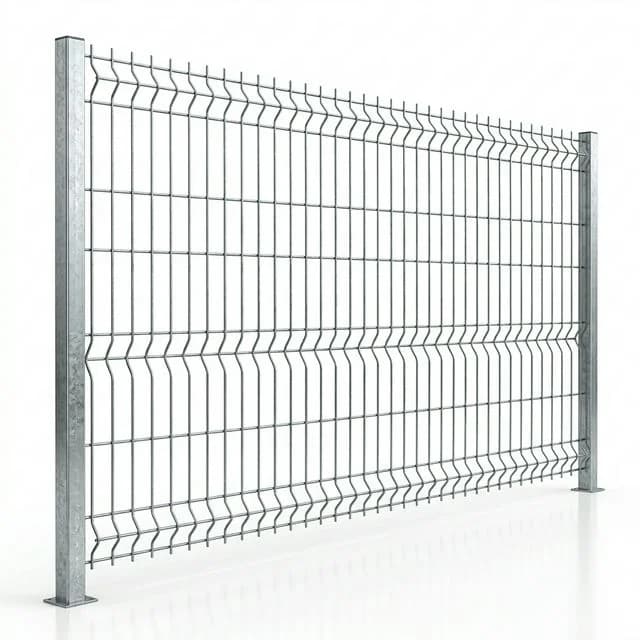
Hot-Dip Galvanized vs. Pre-Galvanized Temporary Fence Panels: Weld-Seam Corrosion, Micron Thickness Standards, and Rental Fleet Lifecycle TCO
Compare hot-dip galvanized vs. pre-galvanized temporary fence panels, check weld protection and micron standards, and request a quote using your fleet TCO.

Beyond the Padlock: Tamper-Proof Clamps and Anti-Lift Brackets for Temporary Fencing
Use this 2026 guide to compare tamper-proof clamps, shear nuts, and anti-lift brackets for temporary fence panels before ordering high-security hardware.